
The Toyota GR GT
UBER CARS
Admin
2/28/20264 min read
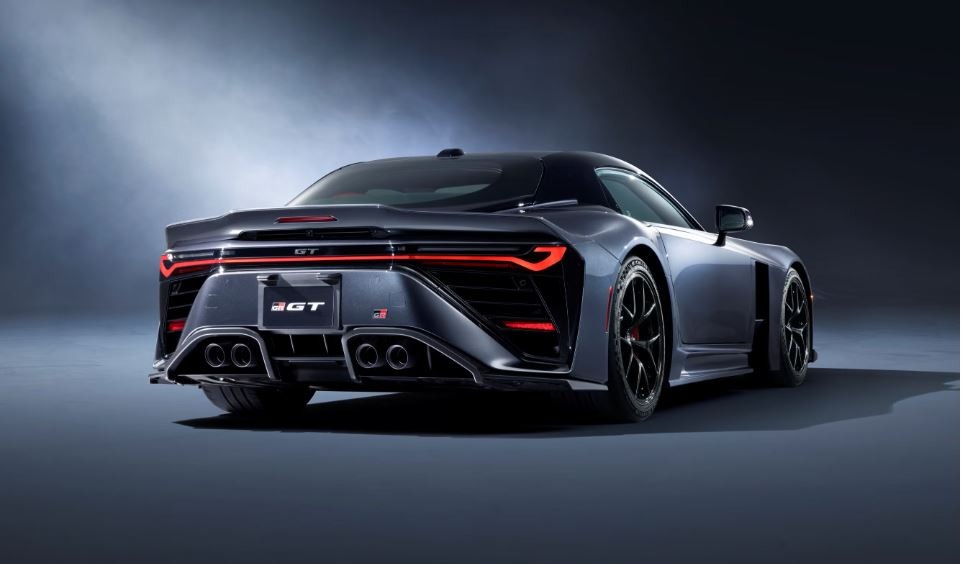
The Toyota GR GT is Toyota’s latest attempt to break into the world’s most competitive performance car segment — head-to-head with Europe’s established sports and supercar icons. Unveiled in December 2025 as a street-legal version of an advanced GT3-derived machine, the GR GT reflects Toyota’s ambition to build a drivers’ supercar grounded in motorsport DNA, yet tailored for use on public roads.
Birth of the Toyota GR GT
From the outset, Toyota’s Gazoo Racing (GR) team positioned the GR GT as a “road-legal race car” — not merely a high-powered street cruiser, but a vehicle engineered with true racing sensibilities.
Driver-First Approach:
Toyota’s development ethos centered around a “driver-first” philosophy. Instead of focusing first on eye-pleasing cosmetics, GR engineers prioritized:
Aerodynamics — the exterior was shaped around optimal airflow and cooling rather than the reverse.
Driver unity — seating, controls and chassis feedback were designed to maximize the connection between man and machine.
Testing across conditions — development included simulators and real runs at circuits like Fuji Speedway and Nürburgring.
The GR GT also symbolizes Toyota’s internal cultural philosophy of “Shikinen Sengu” — a metaphorical passing on of automotive mastery from one generation of engineers to the next, akin to the 2,000-year old Shinto shrine ritual where core structures are periodically rebuilt.
Engineering Leadership:
Led by professional test drivers and engineers under the direction of Toyota Motor Corporation Chairman Akio Toyoda (Master Driver Morizo), the team melded simulation and real-world racing expertise in shaping the GR GT’s dynamic character.
This pedigree places the GR GT in the lineage of Toyota’s most cherished performance machines — alongside the original Toyota 2000GT and the Lexus LFA — models widely regarded as cultural and collectible icons.
Technical Architecture, Powertrain, Materials & Chassis
The GR GT is Toyota’s first production vehicle with a full aluminium space frame, setting a new performance benchmark for the brand. Large aluminium castings, extrusions and advanced joining techniques give rigidity without excessive weight. Carbon-fibre reinforced plastics (CFRP) is used in the hood, roof and critical aerodynamic surfaces. Carbon-ceramic brakes as standard providing high-end braking performance suited for repeated track use. This combination of lightweight metals and composites not only enhances handling but situates the GR GT’s build quality in the upper tier of present-day performance cars.
Powertrain:
At its heart is a newly developed 4.0-liter twin-turbocharged V8 paired with a single electric motor integrated into a rear-mounted transaxle. This hybrid system, designed from the ground up for torque delivery and responsiveness, aims for combined power figures in excess of 650 PS and 850 Nm of torque — with a top speed north of 320 km/h.
V-engine “hot-vee” layout — turbochargers nestled within the V to reduce height and aid center-of-gravity targets.
Dry-sump lubrication — essential for sustained high-G track use.
Electric assist in transaxle — smooths torque delivery and near-instant acceleration response.
Suspension & Transmission:
The car uses double wishbone suspension front and rear, tuned for both street comfort and circuit precision. A bespoke 8-speed automatic transmission with a wet-start clutch replaces a traditional torque converter, improving shift speeds and driver engagement. Michelin Pilot Sport Cup 2 tires developed exclusively for GR GT to match its dynamic profile.
Options and Configurations
Because Toyota’s design process was driven by aerodynamics first, the GR GT’s looks are purposeful and functional — every curve and vent serves airflow, downforce, cooling or drag reduction. While final color options and trim packages have not been fully confirmed ahead of production, high-end supercars typically offer:
Standard shades like Gloss Black, Pearl White, or Performance Red.
Special metallic or matte finishes.
Exclusive collector palettes or bespoke options for early customers.
Given Toyota’s recent GT models (e.g., GR86 special editions), bespoke and limited-edition colors are likely.
Noteworthy Competitors
When it enters the market around 2027/28, the GR GT will sit in a niche populated by serious performance cars — bridging high-end GT models and entry supercars. Expected peers include:
Porsche 911 GT3 - Benchmark naturally aspirated track-focused GT
Mercedes-AMG GT - Front-engine performance cruiser
Aston Martin Vantage S - Grand tourer with luxury appeal and refined performance.
Ferrari 296 GTB / McLaren 750S - Both mid-engined supercars
The GR GT’s hybrid V8 supercar layout places it in a class where both traditional enthusiasts and new collectors converge.
Investment Potential: Value Trends and Market Reality
Pricing estimates vary widely depending on final spec and options, but early indications from automotive press suggest a starting price above US$200,000, potentially rising toward $500,000+ for rare configurations.
Toyota has a storied legacy of producing sports cars with lasting value:
Toyota 2000GT (1967–1970) — widely considered Japan’s first supercar and a highly collectible classic today.
Lexus LFA (2010–2012) — a modern rarity with strong auction results.
These models have routinely sold well above their original MSRPs at collector auctions.
The GR GT is being positioned as the spiritual successor to the LFA, and Toyota’s marketing has explicitly referenced its heritage alongside these icons — a signal that Toyota sees this as more than just another performance car.
Prospects and Risks for Appreciation:
Toyota has hinted at carefully controlling volumes, which historically benefits long-term desirability.
Cars with direct racing links (or GT3 homologation derivatives) often appreciate as icons — think Porsche GT3 RS or Ford GT.
The GR GT’s hybrid twin-turbo V8, aluminium chassis and transaxle setup are rare in front-engine cars, giving it engineering cachet.
As a 2027 launch, early spec changes or production numbers still fluid.
Supercar market can be volatile, sensitive to macroeconomic conditions.
Summary and Final Thoughts: A New Zenith for Toyota Performance
The Toyota GR GT represents Toyota’s clearest statement yet that it belongs in the upper echelon of performance car makers. Its development as a road-legal race car, advanced materials, hybrid powertrain, and lineage elevate it above typical performance coupes — and justify serious attention from collectors and investors alike. While specific color and options lists are forthcoming, the framework for collectibility is in place: limited production, engineering ingenuity, heritage positioning and competitor context all align in favor of long-term appreciation — provided the model achieves similar cultural impact as the Toyota 2000GT and Lexus LFA before it.