
The Mercedes 300 SLR Uhlenhaut Coupe
The Mercedes 300 SLR Uhlenhaut Coupe
UBER CARS
Admin
4/29/20263 min read
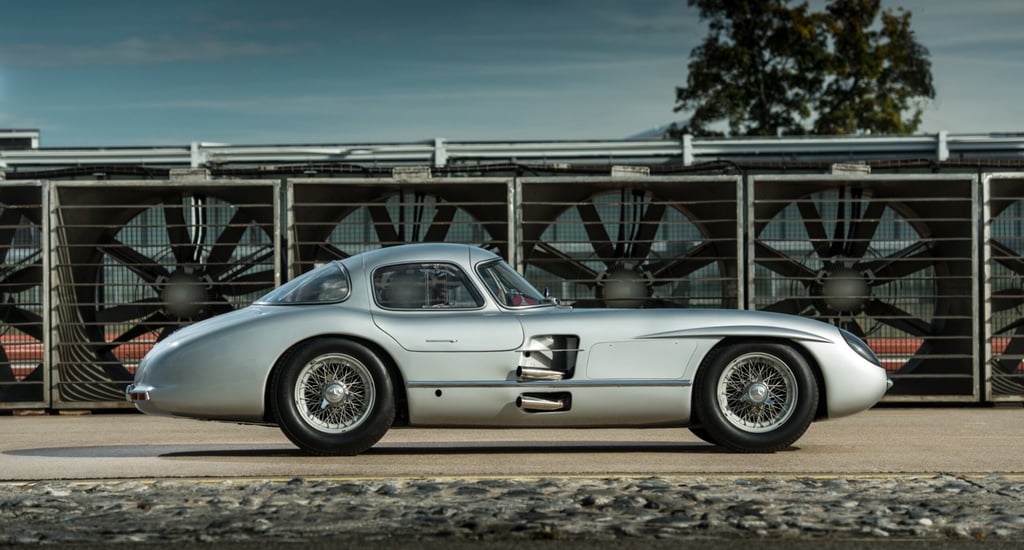
The Mercedes-Benz 300 SLR "Uhlenhaut" Coupé is more than just a car; it is a $143 million myth forged in magnesium and steel. Often described as the "Mona Lisa of Cars," its status as the most valuable automotive object on Earth was solidified in 2022 when it shattered auction records.
The Genesis: Birthed from the Spirit of Motorsport
The development of the 300 SLR Coupé is a tale of triumph followed by sudden, tragic withdrawal. In the mid-1950s, Mercedes-Benz dominated the racing world. While the 300 SL "Gullwing" was their road-going star, and the W196 was their Formula 1 weapon, the 300 SLR (W196S) was designed for the World Sportscar Championship. Rudolf Uhlenhaut, the legendary chief of the passenger car testing department, envisioned a closed version of the open-top SLR racer. His goal was to provide drivers with better protection from the elements and improved aerodynamics for high-speed endurance races like the Carrera Panamericana. Only nine 300 SLR chassis were ever built; of these, only two were converted into the Uhlenhaut Coupé. Following the 1955 Le Mans disaster, Mercedes-Benz withdrew from all motorsport, leaving the Coupés without a race to run. Uhlenhaut claimed one as his "company car," famously using its 180 mph top speed to shrink the commute between Munich and Stuttgart to record times.
Engineering and Materials: The Lightweight Formula
The 300 SLR was not a modified 300 SL; it was essentially a Grand Prix car with a wider body and a second seat.
Chassis: A complex spaceframe made of thin-gauge steel tubing, weighing only 50kg, provided immense structural rigidity.
Bodywork: To save weight, the body was crafted from Elektron, a magnesium alloy that is even lighter than aluminum but highly flammable—a detail that contributed to the severity of the 1955 Le Mans crash.
Engine: The heart of the beast was a 3.0-liter, straight-eight engine (2,982cc) derived from the F1 car. It featured:
Desmodromic valve gear (no valve springs, allowing for high RPM without valve float).
Direct fuel injection, a revolutionary technology at the time.
An output of approximately 310 hp at 7,400 rpm.
Brakes: In - board mounted drum brakes (to reduce unsprung weight)
Weight :~1,117 kg
Top Speed: ~290 km/h (180 mph)
"The Red" vs. "The Blue": Colors and Options
As these were prototypes, there were no "options" in the traditional sense. However, the two existing cars (chassis 0007/55 and 0008/55) are distinguished by their interior finishes:
The Blue: Chassis 0007/55 features a blue checkered fabric interior. It is the car currently housed in the Mercedes-Benz Museum in Stuttgart.
The Red: Chassis 0008/55 features a red checkered fabric interior. This is the specific car that was sold into private hands in 2022.
Exterior: Both cars were finished in the iconic Silberpfeil (Silver Arrow) metallic paint, a tribute to Germany's national racing color.
The Cockpit: The interior was Spartan but functional, featuring a massive, removable four-spoke steering wheel (necessary to climb over the high door sills) and a distinct "dog-leg" gear shifter protruding from the transmission tunnel.
The Rivals: Competitors of the 1950s
In 1955, the 300 SLR was technically in a class of its own. However, its closest spiritual and track rivals included:
Ferrari 250 Testa Rossa: While slightly later in development, the V12 Ferraris were the primary obstacles to Mercedes' dominance in endurance racing.
Jaguar D-Type: The D-Type used advanced aviation-inspired monocoque construction and disc brakes—technology that was arguably superior to the SLR’s drum brakes.
Aston Martin DB3S: A nimble competitor that excelled on tighter circuits where the SLR's raw power was less of an advantage.
Collectability and Investment Potential
In May 2022, the "Red" Uhlenhaut Coupé sold for €135 million ($143 million). This single sale redefined the classic car market.
Scarcity: With only one in private hands, it is the ultimate "blue chip" asset. It is unlikely another will ever come to market in our lifetime.
Market Influence: This car acts as a "tide that lifts all boats." Its value has bolstered the prestige of the more common 300 SL Gullwings, which now regularly see prices exceeding $2 million.
Future Value: As a piece of industrial art, its potential is no longer tied to the automotive market alone, but to the world of fine art (Sotheby's, Christie's). It is widely considered the safest automotive investment, assuming the owner can maintain its provenance.
Summary and Final Thoughts: A Tangible Myth
The 300 SLR Uhlenhaut Coupé remains the pinnacle of the "Silver Arrow" era. It represents the final moment of pure, unrestricted mechanical engineering before safety regulations and electronic aids began to reshape the industry. For the collector who has everything, this car is the only thing left to acquire—a 300 km/h time capsule of German engineering's greatest height.