
The Mercedes 190E 2.5-16 EVO II
The Mercedes 190E 2.5-16 EVOLUTION II
UBER CARS
Admin
10/29/20256 min read
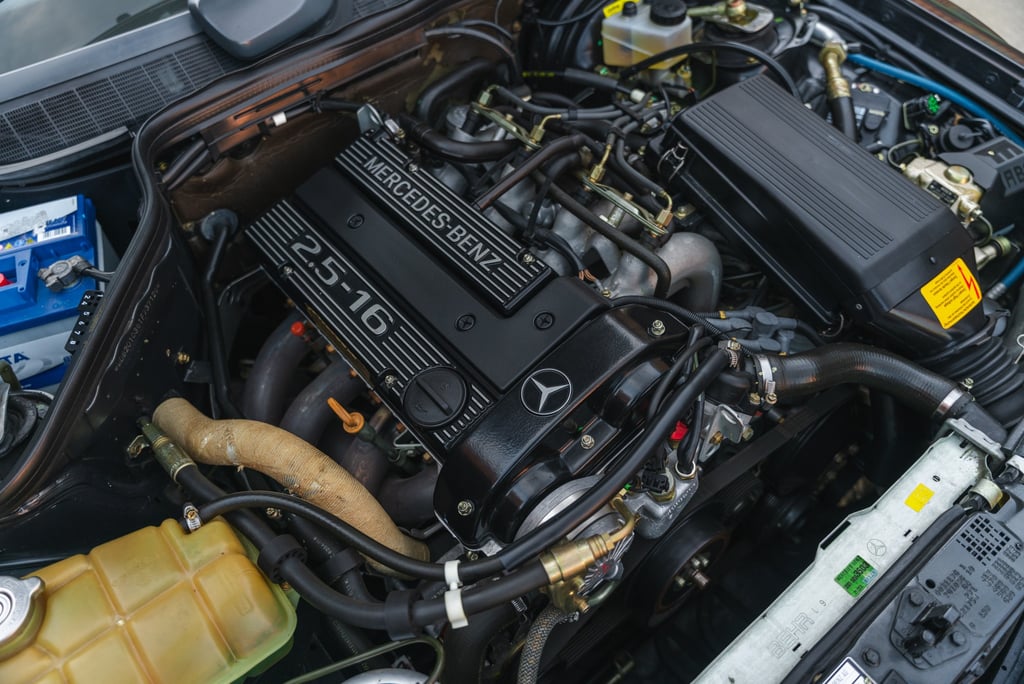
The Mercedes‑Benz 190E 2.5‑16 Evolution II (often shortened to 190 E 2.5-16 Evo II) is widely regarded as one of the most iconic homologation special sedans of its era. Built in extremely limited numbers (just 502 units of the road-going version) in 1990–91 for the purpose of homologating a car for the Deutsche Tourenwagen Meisterschaft (DTM) touring-car series, it encapsulated high performance, aggressive aerodynamics and race-derived technology. In this article we’ll explore its performance characteristics, development story, the available options and colours, its legitimate competitors of the era, and finally assess which model year (or variant) is most valuable today for collectors.
The lineage of the 190 E 2.5-16 Evo II begins with the W201 chassis (190 series) which - in the mid-1980s - Mercedes-Benz developed a high-performance four-valve-per-cylinder 16-valve four-cylinder engine in collaboration with Cosworth, initially destined for rallying and later touring car competition. The first “16” variant was the 190 E 2.3-16 (185 hp), followed by the 2.5-16 road car (197 hp) and then the “Evolution” models to match the DTM competition requirements. By 1990, Mercedes decided to produce a road version of the DTM racer — the Evo II — to satisfy regulations requiring ~500 cars sold to enter competition.
Engine and Drivetrain:
The engine: a 2,463 cc (2.5-litre) inline-4, DOHC, 16-valves (coded M102 992) derived from the earlier Cosworth-developed head.
Rated for the road: about 232 hp (235 PS) at ~7,200 rpm and 245 Nm (~181 lb-ft) at ~5,000 rpm.
Many sources cite 235 hp (173 kW) & top speed ~250 km/h.
Rear-wheel drive, 5-speed manual (dog-leg first gear in some accounts) gearbox.
Limited-slip differential (Anti-Slip Differential or ASD) included for better traction.
Chassis, Suspension & Aerodynamics:
Rear multi-link suspension (from earlier 16-valve models) and sports-tuned suspension.
Self-levelling rear suspension (in some markets) and adjustable ride height via interior switch.
Aerodynamic bodywork: The Evo II featured wide flared wheel arches, deep front and rear spoilers, large fixed rear wing with adjustable flap, and significant wind-tunnel development to generate downforce and reduce drag (Cd around 0.29 quoted).
17-inch alloy wheels (225/50 ZR16 previously for Evo I; Evo II bumped to 17″) and high-performance tyres and brakes.
Performance Figures & Driving Character:
Weight: around 1,340 kg (unladen) for the Evo II.
0-100 km/h (0-62 mph): approximately 7.0 s in real-world testing (some sources list 6.9 s).
Top speed: around 250 km/h (155 mph) for the road car.
The enhanced aerodynamics and suspension gave the Evo II sharper handling, better high-speed stability and track readiness compared to the standard 190 E models.
Homologation & Rarity:
Only 502 units of the Evo II were produced for the road version.
The rapid build and exclusivity – combined with its DTM-race associations – make the car especially desirable today.
Engine & Response:
The high-revving 2.5-litre four cylinder remains the star. With a redline above 7,500 rpm and a power peak at 7,200+ rpm, the engine delivers a distinct feel: linear power growth, strong mid-range (~5,000 rpm torque peak) and a crisp top-end.
Compared to budget 190 E variants, the Evo II’s engine is a serious leap in terms of aspiration, valve-gear, and tuning. The dog-leg 5-speed manual gives a sharp, purposeful shift feel.
The car feels far more track-focused than a typical sedan: tight steering, firm suspension, aggressive aero downforce at speed (noticeable in high-speed cornering) and genuine capability on a circuit.
Handling, Brakes & Dynamics:
Thanks to its upgraded suspension, larger brakes, wide tyres and bespoke bodywork, the Evo II delivers surprisingly balanced handling for a sedan of its era. The aerodynamic downforce (some 46.7 kg extra at the front and 125.9 kg at the rear over the Evo I) significantly improved high-speed stability.
The chassis remains stiff and driver-engaged; critics often cite it as one of the more rewarding 1990s driver’s sedans. However, some compromise remains compared to contemporary hardcore sports cars: as a four-door sedan, with some weight, the packaging is still of a “street yet track-derived” nature rather than full race car.
Real-World Performance & Usability:
While the spec sheet shows ~7 sec 0-100 km/h, in real-world use the Evo II’s combination of performance and usability made it very compelling: it could serve as a daily driver (if you’re okay with firm ride and limited production servicing), while also being genuinely fast and agile. The presence of standard comfort features (in many units) like air conditioning, sunroof, Recaro seats means it wasn’t a stripped-out race car, which adds to the appeal for collectors today.
Strengths:
Limited production, homologation pedigree.
High-revving, purely naturally-aspirated engine (in an era shifting to forced-induction) gives analog driving feel.
Visually dramatic aero kit and strong presence.
Excellent historical significance for Mercedes motorsport and DTM.
Weaknesses:
Being built for homologation, the ride and comfort are compromised compared to standard everyday Benz sedans.
Limited servicing infrastructure for such rare model (parts may be expensive).
As a 1990 sedan, by modern standards some circuits, electronics and driver aids are dated (but many enthusiasts prefer this purity).
In left-hand-drive, export/registration may bring costs in certain markets.
Options, Colours & Variants:
Nearly all road versions of the Evo II were finished in a single colour: Blauschwarz Metallic (blue-black metallic). Sources note that 500 of the 502 cars were this colour. The final two units (numbered 501 and 502) were finished in Astral Silver. These rare two are highly sought after by collectors. Therefore, if you ever encounter one of the “non-blue-black” colours, that is immediately a rarity.
Interior and Equipment Options:
Despite being a performance homologation model, the Evo II offered various equipment features:
Sunroof (tilt-and-slide) often standard.
Air-conditioning.
Heated front seats.
Recaro bucket seats (in many markets) or sport seats with deep bolstering.
Leather/cloth upholstery combinations (varied by market).
Becker Grand Prix radio/cassette in original spec.
Adjustable ride-height switch (for suspension height adjust) in some left-drive cars.
Each car had a numbered badge/plaque (e.g., “XXX/502”) marking its place in the run.
Models which preceded the Evo II:
190 E 2.3-16 (1984-88) – the first 16-valve version.
190 E 2.5-16 (1988-93) – non-Evolution, with 197 hp.
190 E 2.5-16 Evolution (Evo I) – a limited run before Evo II.
Each successive model bumped performance, aero, exclusivity and collectability. The Evo II, being the ultimate version, commands the highest attention.
Competitors of the Era:
To fully appreciate the Evo II, it is useful to compare with its near contemporaries — other high-performance homologation sedans/touring cars from the late 1980s / very early 1990s, namely the BMW M3 (E30) (1986-1991).
The E30 M3 was BMW’s homologation model for their own touring car programme.
By 1990, the BMW M3 Sport Evolution variant (2.5-litre four-cylinder) produced ~238 hp (175 kW) and had very limited production run.
Performance: 0-100 km/h around mid-6 seconds; top speed ~248 km/h.
While the BMW is a coupé (rather than four-door sedan) and somewhat different segment, the M3 was a chief rival in spirit and image: high-revving naturally aspirated four-cylinder, racing pedigree, limited production.
Thus, the 190 E 2.5-16 Evo II stands quite unique in the four-door, naturally-aspirated, high-rev “homologation sedan” niche.
The Evo II’s 232-235 hp is slightly less than the BMW M3 Sport Evo’s ~238 hp, but the Mercedes is a four-door sedan (thus heavier), with huge aero kit, making it arguably more aggressive in concept. The exclusivity (only ~502 units) gives the Evo II a rarity edge compared to many more E30 M3s built. For collectors, different shapes (sedan vs coupé) appeal differently – both have motorsport heritage and strong fan bases.
Most Valuable Model Year & Collector Insights:
For the Evo series, the final model – the 190 E 2.5-16 Evolution II (1990/1991) – is by consensus the most collectible and valuable for several reasons:
It represents the apex of the W201 16-valve programme.
It was produced in the smallest numbers (502).
It had the most aggressive aero and race-derived spec.
It is most tightly linked to the DTM racing success of Mercedes in the early 1990
Collector market indicators:
Some Evo II units are fetching hundreds of thousands of dollars/euros in excellent, low-mileage condition. One listing referenced a 190 E 2.5-16 Evo II with 11,339 miles for sale at USD ~$475,000. Auctions and enthusiast sales often emphasise original colour (blue-black), completeness of documentation, very low miles and originality.
The 1990 (and early 1991) build of the 190 E 2.5-16 Evolution II is the “cream” of the crop. Particularly rare are the two units finished in Astral Silver, as opposed to the standard blue-black metallic (Blauschwarz). These examples are likely to command the highest premiums due to extreme rarity. Also, lower serial numbers (e.g., Car #1/502) or cars that remained with first-owner, have immaculate service history and original specification – these attributes enhance value.
Practical considerations for ownership:
Maintenance and parts: As a limited‐run homologation car, servicing and spares may be more expensive and require specialist attention.
Preservation vs use: Many collectors will prioritize low mileage and originality, but the car is capable of being driven and enjoyed.
Market trends: Appreciation in recent years for 1980s/1990s homologation performance cars (the “golden era” of touring car specials) means the Evo II is well placed.
Summary & Final Thoughts:
The Mercedes 190E 2.5-16 Evolution II is a unique performance sedan: rare, race-derived, limited production, sporting four-valve high-revving engine, dramatic aero, and significant motorsport heritage. Its performance may not leap off modern pamphlets when compared to turbocharged monsters of today, but its purity, driver engagement and historical context make it an enduring driver’s classic. In comparison to its era rivals (such as the BMW E30 M3), the Evo II holds its own thanks to its exclusivity and four-door saloon form (offering a different character).
For enthusiasts and collectors alike, the 1990/91 Evo II is the version to target, particularly those with rare colours or low build numbers. If you are exploring this model, ask about serial number plate, colour authenticity, service history, original wheels/tyres, documentation and whether it retains all its original components (engine, gearbox, etc).