
HWA Evo 190E Restomod: Neo-Classic Perfection
Discover the HWA Evo 190E restomod, a pinnacle of neo-classic engineering. With €15.4m in development, it combines extreme build quality and emotional resonance, making it an elite investment for collectors. Experience a tribute to motorsport's golden era, insulated from modern EV commoditization.
UBER CARS
Admin
6/29/20267 min read
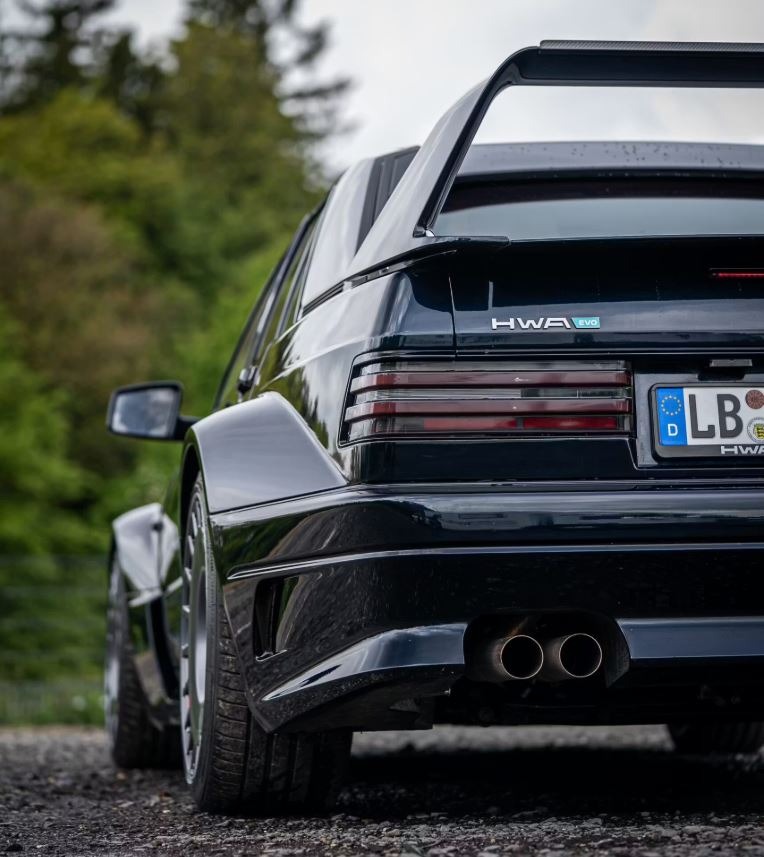
Built by HWA AG in Affalterbach, Germany, the car reinterprets the iconic Mercedes-Benz 190E 2.5-16 Evolution II, which originally dominated the Deutsche Tourenwagen Meisterschaft (DTM) in the early 1990s. To truly understand the collectability and structural gravity of the HWA Evo, one must first understand its architect: Hans Werner Aufrecht. As the co-founder of AMG in 1967, Aufrecht defined Mercedes-Benz high-performance for decades. When DaimlerChrysler acquired full control of AMG in 1999, the specialized motorsport and development arm was spun off to form an independent entity: HWA AG.
The original 190E Evolution II was a pure homologation special, limited to precisely 502 units worldwide to satisfy DTM regulations. Today, those original cars are fiercely guarded assets, routinely commanding between $400,000 and $600,000 at international auctions. Rather than modifying, altering, or destroying any of those 502 sacred artifacts, HWA engineered a profound alternative. Using standard, high-production W201-generation Mercedes-Benz 190E sedans as core structural donors, HWA strips each vehicle down to its bare metal cabin to create an entirely new, carbon-bodied monster. Limited to a production run of just 100 units globally—with 25 units permanently allocated to the United States market—the HWA Evo instantly positions itself within the rarest tier of modern automotive architecture, commanding a base retail price of €714,000 (excluding VAT, local taxes, and bespoke optional configurations).
The Genesis and Development
The development of the HWA Evo represents a masterclass in modern computational fluid dynamics (CFD), structural finite element analysis, and top-tier motorsport engineering. Chief Technology Officer Gordian von Schöning spearheaded a rigorous, clean-sheet development program that treated the vintage W201 platform not as a vehicle to be modified, but purely as a biological donor. Only the original central steel cabin section, the front windshield wiper arm mechanism, the door hinges, and the door handles are retained from the donor chassis. Every other component is discarded in favor of modern race-bred architecture.
To establish a structural foundation capable of handling more than double the horsepower of the original 1990s DTM touring cars, HWA completely cut away the front and rear steel ends of the donor vehicle. In their place, they engineered bespoke subframes utilizing high-strength steel and aerospace-grade aluminum. This structure directly mimics the architecture of modern Mercedes-AMG GT3 race cars. The front wheels are pushed forward by 50mm to extend the wheelbase, drastically altering the vehicle's dynamic pivot point and tracking width. This adjustment positions the driver perfectly in the center of the rotational axis, maximizing sensory feedback.
The Transaxle Innovation
While the original 190E utilized a traditional front-engine, front-gearbox layout that biased weight heavily toward the nose, HWA recognized that a modern 450+ horsepower sports sedan requires superior weight distribution to optimize mechanical grip. The engineering solution was an entirely new, rear-mounted six-speed manual transaxle. By moving the transmission to the rear axle, HWA achieved a perfect 50:50 static weight balance. Power is transferred from the front-mounted engine via an ultra-lightweight carbon fiber propshaft rotating inside a rigid torque tube, completely isolating the cabin from harmonic vibrations while providing immense chassis stiffness.
The suspension architecture is equally uncompromising. HWA eliminated the standard MacPherson struts of the vintage 190E, implementing a dual-wishbone configuration at both the front and rear axles. Every single mounting point utilizes sealed uniball bearings rather than rubber or polyurethane bushings, removing compliance and ensuring absolute geometry retention under heavy cornering loads. Dampening is managed by a custom-developed KW Dual Dynamic Control (DDC) system, which can be configured as a manual or electronically adjustable setup depending on the selected options package.
Perhaps the most significant development cost involves the vehicle's electronics. Rather than utilizing off-the-shelf components, HWA partnered with Bosch to execute an extensive €14 million development program for a bespoke, track-calibrated ABS, Traction Control, and Electronic Stability Program (ESP). A further €1.4 million was spent developing the unique, state-of-the-art LED front headlights and rear lighting arrays, ensuring that the car achieves modern road homologation across major global markets without losing its menacing, blocky 1990s visual identity.
Materials and Structural Composition
The structural ethos of the HWA Evo revolves around an obsessive weight-reduction program, targeting a wet weight of exactly 1,350 kg (2,976 lbs)—identical to the original 190E Evo II homologation special, despite carrying modern safety infrastructure, dual-zone climate control, heavy electronic modules, and massive braking systems. To achieve this weight target, HWA utilized a full pre-preg carbon-fiber outer skin. Every body panel—including the front splitter, hood, doors, side skirts, massive front and rear DTM-inspired flared wings, roof, boot lid, and towering rear wing—is laminated and molded from high-modulus pre-preg carbon fiber.
Inside the vehicle, the material selection carefully balances historical reverence with track readiness. The standard interior features Recaro performance front seats trimmed in exclusive lightweight materials. Customers can specify either fine-grain aniline leather or high-grip Alcantara, interspersed with checkered "Heritage" fabrics that directly reference the original 1990s patterns. The instrument cluster is fully digital, enclosed within a minimalist dashboard made of matte-finished carbon fiber to completely eliminate glare. An integrated, body-color roll cage is seamlessly blended into the rear cabin structure, providing immense torsional rigidity while maintaining a functional two-tier or optional four-seat layout.
Customisation and Options
Unlike the original 190E Evolution II, which was offered exclusively in a single color—Blauschwarz Metallic (Blue-Black Metallic, color code 199)—HWA has established an in-house paint facility capable of fulfilling absolute bespoke commissions. This freedom of expression marks a critical differentiator for modern collectors who demand individuality.
The Three Tiers of Paint Customization:
Standard Historical Palette: Features traditional shades such as Brilliant Silver Metallic, Blauschwarz Metallic, and Aspen White, allowing owners to capture the clean, menacing aesthetic of early 1990s German sports sedans.
Paint-to-Sample (PTS): HWA provides a complete paint-matching service. Owners can specify historically significant colors from Mercedes-Benz's vast heritage (such as Signal Red or DB568 Olive Green), or select modern satin, matte, and liquid-metal finishes.
Bespoke DTM Heritage Liveries: For the ultimate collector, HWA offers hand-painted racing liveries inspired by the golden era of the 190E's racing history. This includes the iconic Sonax silver-and-black livery, the bold green-and-yellow Diebels Alt scheme, and custom variations incorporating modern geometric patterns.
An elegant signature of the brand is the integration of "Technical Blue" accents. Unless specified otherwise, the high-performance Brembo brake calipers, manufacturer emblems, and specific interior dial highlights are rendered in this vivid, technical hue, signaling the car's HWA engineering DNA. Additionally, window tinting is highly customizable, with factory options ranging from a classic green thermal tint to specialized blue, grey, or opaque black glass configurations.
Every HWA Evo is built to order, but several highly specialized option packages allow owners to tailor the vehicle toward pure grand touring luxury or absolute track supremacy:
The Speed Package: For drivers seeking maximum velocity, this package alters the electronic limiters and final-drive ratios of the 6-speed transaxle, uncorking a top speed of 185 mph (298 km/h), up from the standard electronically limited 168 mph. It also introduces active aerodynamics with an extendable flap/Gurney on the rear wing.
The Affalterbach Package: Designed as an homage to the firm's roots, this comprehensive upgrade includes a full Inconel sports exhaust system which saves weight and produces a raspy, high-rpm scream reminiscent of early Formula 1 engines. It adds an extra "Track" mode to the Bosch ECU, upgrading the power output of the 3.0-liter twin-turbo V6 past the 500 hp mark, and pairs it with electronically adjustable KW DDC dampers.
Aero and Chassis Upgrades: Collectors can opt for functional carbon-fiber Aero Wheel Covers that fit onto the 19-inch front and 20-inch rear forged 6-spoke heritage wheels, reducing aerodynamic drag. A Hydraulic Lift System (HLS) is also highly recommended, allowing the ultra-low front splitter to rise by 30mm to clear speed bumps and driveway aprons.
The Rivals: Competitive Landscape
To analyze the HWA Evo's position in the 2026 market, it must be evaluated alongside its peers in the hyper-exclusive "Neo-Classic Restomod" tier. These are vehicles that blend vintage design language with multi-million-dollar manufacturing budgets:
Singer DLS Turbo - Based on a Porsche 964 (911), with a 3.8L Twin-Turbo Flat-6 with 700bhp
Kimera EVO37 - Based on a Lancia Beta Montecarlo, with a 2.1L Turbo & Supercharged I4 with 505bhp
Alfaholics GTA-R 290 - Based on a Alfa Romeo Giulia, with a GTV 2.3L Twin-Spark I4 with 240bhp
Cyan Volvo P1800 - Based on a Volvo P1800 2.0L Turbo I4 with 420bhp
While Singer commands a higher entry price, it caters to an intensely crowded Porsche ecosystem. The HWA Evo completely dominates the German front-engine sports sedan segment, presenting no direct rival from BMW or Audi at this level of structural re-engineering. It stands completely alone as the ultimate expression of the DTM golden era.
Collectability and Investment Potential
From an asset-allocation perspective, the HWA Evo possesses several core micro- and macro-economic factors that suggest strong capital preservation and exceptional long-term appreciation potential. In the contemporary luxury market, generic hypercars have begun to experience a stabilization in demand due to over-saturation. Conversely, limited-run, historically rooted restomods are seeing highly aggressive capital inflows.
Macro Market Analysis & Scarcity Dynamics
The primary driver of the HWA Evo’s investment security is its strict production ceiling of 100 units. To put this in perspective, modern limited-run Ferraris or Porsches frequently see production numbers ranging from 499 to 2,500 units. A production cap of 100 ensures that global demand will consistently outstrip supply, particularly when considering that 25 units are permanently allocated to the United States market via specialized import regulations as a 25-year-old vehicle chassis. By retaining the original 1989-1993 chassis identities, the HWA Evo circumvents modern federalization hurdles, allowing it to be legally driven and registered in key wealth hubs like California and Connecticut from day one.
The "Aufrecht Premium" and Motorsport Validation
Vehicles engineered by independent shops often suffer from a lack of corporate legitimacy, capping their long-term value. The HWA Evo completely bypasses this limitation due to the "Aufrecht Premium." Because HWA is the actual engineering force behind Mercedes-Benz’s real-world racing victories, the market views this car as an official motorsport product rather than an aftermarket customization. This institutional validity is further solidified by HWA's 2026 entry of the track-focused Evo R variations into the gruelling Nürburgring 24 Hours, establishing immediate, modern racing pedigree that directly enhances the road car's value.
Historical Financial Trajectory of Predecessors
Looking at early adopters of this ultra-high-end engineering movement reveals a compelling financial trajectory. Early Singer 911 commissions that originally cost $400,000 now routinely trade hands on the secondary market for $1.2M to $1.5M. The original Mercedes 190E Evo II has risen from $150,000 to over $450,000 within the last decade. Because the HWA Evo is priced at the mid-point of this market (€714k), it captures an audience of ultra-high-net-worth individuals who view the vehicle as a usable, modern piece of art that eliminates the reliability and maintenance headaches of 35-year-old classic cars.
Summary and Final Thoughts: The Zenith of Neo-classic Engineering
The HWA Evo is a highly rated "Strong Buy" for alternative asset portfolios. It offers an optimal combination of extreme build quality, €15.4M in technical engineering development, absolute scarcity, and deep emotional resonance for the generation of collectors currently entering their peak wealth years. It represents not just a spectacular homage to the golden era of motorsport, but an elite financial instrument that is insulated from the commoditization of the modern electric vehicle market.