
The DMC-12 DeLorean
UBER CARS
Admin
12/29/20254 min read
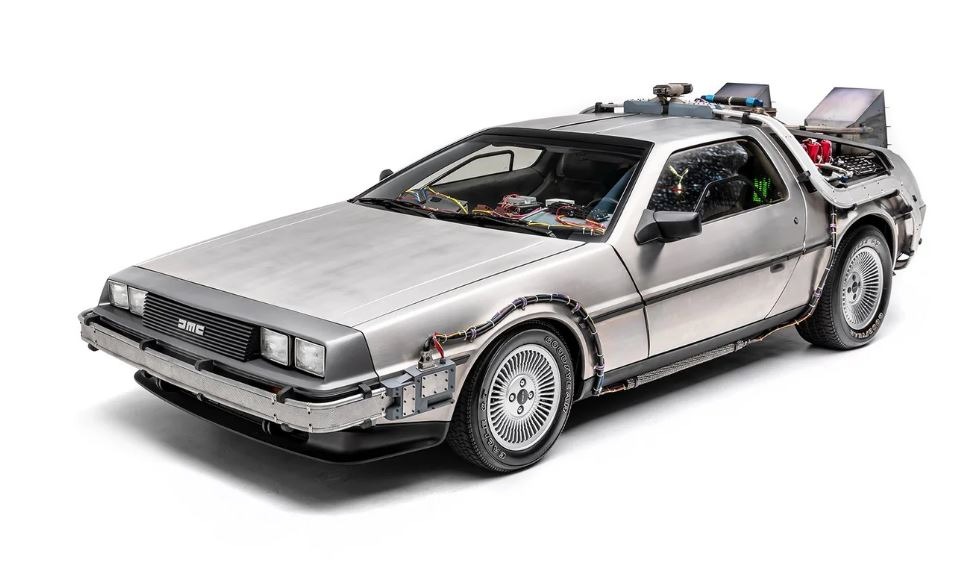
Few cars from the late 20th century are as instantly recognizable as the DeLorean DMC-12. Built for just a brief period — 1981 to 1983 — its stainless-steel body and dramatic gull-wing doors secured its place in automotive folklore. Its fame was only amplified by its role as the time machine in the Back to the Future movie trilogy, turning a commercial underperformer into a lasting cultural symbol. Although only around 9,000 units were produced, and far fewer survive in good condition today, the DMC-12’s mystique continues to attract collectors — not solely due to nostalgia, but because it represents a unique moment in automotive design and manufacturing.
Visionary Beginnings and Lotus Collaboration
John Zachary DeLorean, an accomplished engineer and auto executive — best known for work on the Pontiac GTO and Firebird — founded the DeLorean Motor Company in 1975 with a bold vision: create a sporting automobile unlike anything else on the road. DeLorean approached famed Italian designer Giorgetto Giugiaro (Italdesign) to craft a sleek, futuristic body. Giugiaro’s sharp, wedge-shaped aesthetic perfectly matched the era’s appetite for space-age design. While the body was eye-catching, much of the vehicle’s engineering was grounded in reality.
To manage costs and meet timelines, DMC tapped Lotus Engineering (led by Colin Chapman) to adapt its backbone chassis design and suspension geometry, originally from the Lotus Esprit, a contemporary European sports car. Under the rear deck was the Peugeot-Renault-Volvo (PRV) 2.85-liter V6 — a powerplant chosen for availability rather than performance — generating around 130-horsepower (U.S. spec). While not fast by sports car standards, it delivered acceptable drivability for its era. The gull-wing doors, supported by cryogenically preset torsion bars and nitrogen struts, were both showpiece and engineering solution — allowing easier access in tight spaces despite their weight. The stainless panels were mounted to a fiberglass monocoque underbody, connected to a steel backbone frame — a Lotus-derived design that prioritized rigidity over outright performance.
The DMC-12’s signature feature is its unpainted brushed 304 stainless-steel exterior. Each panel was fitted directly over a fiberglass underbody — a visually striking choice but one that invited fingerprints, scratches, and maintenance challenges. Only three factory gold-plated DeLoreans were ever completed, commissioned as special builds and now housed in museums or private collections — exceptionally rare survivors.
Options and Configurations
Unlike many competitors of its era, the DMC-12 was deliberately low-option:
Transmission: 5-speed manual (standard) or 3-speed automatic ($650).
Interior Color: Black (standard) or later Grey introduced mid-1981.
Dealers offered accessories such as a car cover, floor mats, accent stripes (black or grey), luggage racks, and ski-rack adapters — minimal personalization compared to rivals.
Standard features included air conditioning, leather seats, power accessories, an AM/FM cassette stereo, and tinted glass — generous equipment for the period.
Virtually all DMC-12s left the factory in their natural brushed stainless steel finish — unpainted and uncoated. This absence of paint was a defining visual trait, although it was not truly a “color” choice for buyers.
Some owners have since painted their DeLoreans — at the expense of originality — and a few rare factory-related examples ended up gold-plated through special arrangement.
Noteworthy Competitors
While no car looked quite like the DMC-12, these competitors highlight that by performance or market segment, the DeLorean was more of a design statement than a threat to mainstream sportscars. Several contemporaries occupied similar sports car or enthusiast niches, ranging from accessible coupes to performance-leaning GTs:
Porsche 924/944: Popular entry-level sports cars with balanced handling — often more performance-oriented than the DeLorean, and respected among enthusiasts.
Lotus Esprit: Shared engineering DNA with the DMC-12 but offered significantly stronger performance credentials.
Buick GNX: A limited-run American performance car revered today for power and rarity.
Ferrari 308 and Lamborghini Countach: Represented high-end European exotica of the decade — unreachable by typical DMC-12 buyers yet aspirational benchmarks.
TVR Tasmin, Toyota MR2 — smaller niche sports cars of the era that found their own followings.
The DMC-12’s role in Back to the Future elevated it permanently in pop culture — to some owners’ advantage in desirability and price. With a limited production run and many cars lost or deteriorated over time, well-preserved examples are inherently rarer today. Numbers in good condition are significantly fewer than the roughly 9,000 originally built. A thriving aftermarket and enthusiast community help sustain restorations and part availability, making ownership more viable than for many forgotten classics.
Investment Potential: Value Trends and Market Reality
Performance and engineering are not standout compared to peers. Values linked more to nostalgia and pop culture than pure automotive excellence. That said, market indexes show DeLorean values have risen over recent years but more modestly than many other collectible cars. Collector car guides suggest values generally fall into these rough bands today:
Fair Condition: ~$35k–$45k
Good: ~$50k–$65k
Excellent / Low Mileage: ~$70k–$90k
Museum-quality / Concours: >$100k
Many collectors regard the DMC-12 as a core collectible rather than a blue-chip investment — meaning it’s desirable and holds value, but rarely skyrockets like rare exotica (e.g., Ferrari or Porsche icons).
Summary and Final Thoughts: The DMC-12’s Place in History
The DeLorean DMC-12 was far from perfect as a sports car — underpowered and hamstrung by production challenges — yet its bold design, unique materials, and pop-culture destiny have cemented its legend. Its collectability is genuine, rooted as much in emotion and iconic imagery as in rarity or mechanical significance. For many owners and enthusiasts, this car isn’t just a classic — it’s a rolling conversation piece, a snapshot of ’80s optimism, and a reminder that automotive history is shaped as much by dreams as by lap times.