
Pininfarina JAS Motorsport Honda NSX Restomod
The Pininfarina JAS Motorsport Honda NSX Restomod
UBER CARS
Admin
11/29/20257 min read
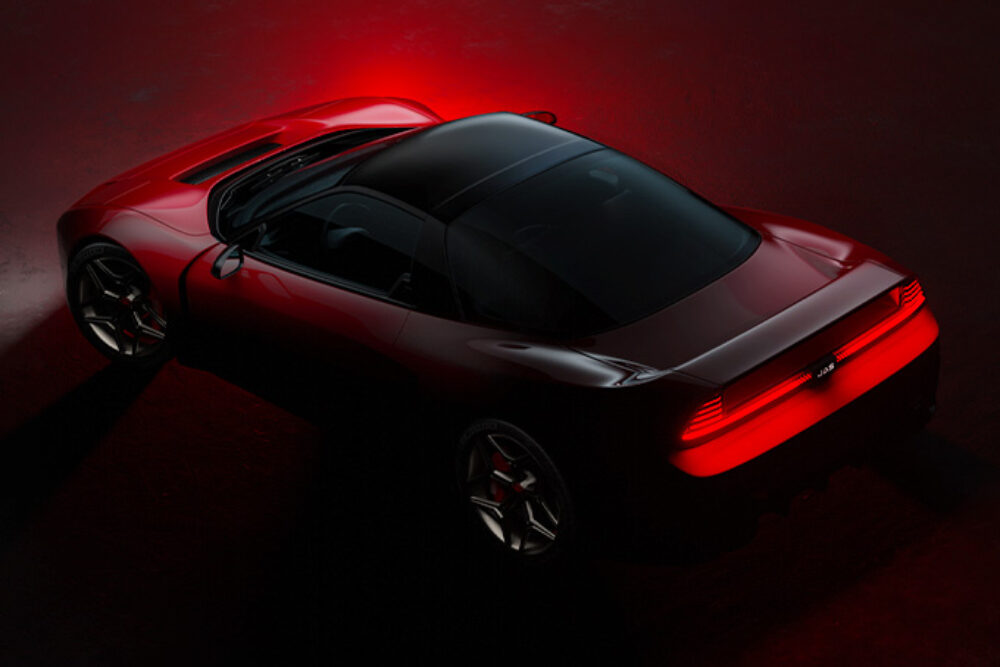
The NSX is already a landmark: aluminum monocoque, Senna-influenced handling, and the purity of a naturally aspirated mid-engine V6. Layer Pininfarina’s sculptural design language on top, and you get something both reverent and radically new. This article explores the collectability, development, design/materials/option landscape, competitive context, and investment potential of the forthcoming Pininfarina JAS Motorsport Honda NSX Restomod (hereafter “the Restomod NSX”).
Why the NSX deserves a restomod:
The roots of this restomod run deep. The original Honda NSX (first generation, 1990–2006) holds a special place in automotive history. It was born out of Honda’s desire to build a supercar that combined exotic-car performance with everyday usability. The genesis can be traced back to the 1984 Honda HP-X concept — styled by the legendary Italian design house Pininfarina — which planted the mid-engine V6, rear-wheel-drive idea and a wedge-shaped, driver-focused design into Honda’s DNA.
When the production NSX launched in 1990, it was revolutionary: the world’s first road-going sports car with a full aluminium semi-monocoque chassis, married to a transversely-mounted naturally aspirated V6, delivering supercar-level performance with Honda’s famed reliability.
Over its lifespan, the NSX earned a cult following among “driver’s-car” purists, particularly those who prized its combination of balance, lightness, and engagement — a “supercar for the real world.”
Fast-forward to 2025: The combination of nostalgia for 1990s JDM supercars, rising classic-car values, and a growing “restomod culture” among collectors has created fertile ground for a reimagined NSX. That’s where JAS Motorsport (an Italian outfit long affiliated with Honda racing) and Pininfarina have stepped in to deliver a restomod that seeks to honour the NSX’s original spirit — but with modern materials, refined design sensibilities, and updated mechanicals.
Thus, the Restomod NSX is not mere nostalgia — it is a carefully calibrated re-interpretation: a marriage of Japanese engineering roots and Italian coach-built sensibilities. For collectors, that dual heritage is extremely compelling.
JAS Motorsport + Pininfarina:
The project is a collaboration between:
Pininfarina — chosen for its historical link to the NSX story (via the HP-X), and its legendary design pedigree spanning Ferrari, Alfa Romeo and more.
JAS Motorsport — an Italian motorsport outfit with longstanding technical ties to Honda dating back to the late 1990s, when it first ran Hondas in touring-car series. Over decades it has gained deep experience in race prep, tuning and chassis engineering — including developing Honda’s customer-race cars.
The restomod begins life with a “donor car” — an original first-gen NSX (left- or right-hand drive, depending on market).
JAS strips the donor to its chassis and rebuilds it in their workshop (in Arluno, Milan) — effectively re-engineering the NSX from the ground up.
Pininfarina designs a new body shell — completely redone in carbon fiber, replacing the original’s aluminium shell — to give the car weight-saving, strength, and a contemporary reinterpretation of the classic NSX silhouette.
Under the skin, the car retains a naturally aspirated V6 married to a six-speed manual gearbox, preserving the analog, driver-focused character of the original NSX — but reportedly reworked for more power, torque and responsiveness.
Suspension, braking, and other mechanical components are “motorsport-derived,” improving handling, braking, and overall driving dynamics — likely bringing the car closer to track-day capability without losing road usability.
JAS and Pininfarina reportedly plan an “ultra-limited” production run. As of late 2025, a full reveal is scheduled for early 2026, with no public confirmation yet of the total number of cars, final pricing, or exact specification options.
Materials, Design Details & Options:
Although full details are not yet released, published teasers and early reports give a good sense of what to expect in terms of materials, design language and possible options:
Carbon-Fiber Bodywork:
The most transformative change: the original aluminium body is discarded. Instead, the restomod uses a full carbon-fibre shell. This likely reduces weight, increases structural rigidity, and makes the car more responsive to chassis inputs — a big plus for handling, braking, and overall agility.
The body maintains much of the original’s iconic proportions — including the long nose, mid-engined stance, low-slung profile, and pop-up headlight architecture — but reinterprets them through a modern design lens.
Exterior Design Tweaks:
While retaining the classic pop-up headlights and modest rear spoiler, the restomod introduces modern touches: LED daytime running lights at the front, new vents/air intakes on side panels and rear quarters for improved cooling and airflow, a bonnet vent (reminiscent of track-oriented versions), and a more aggressive diffuser at the rear.
The result appears to be a car that is instantly recognizable as an NSX — but one with presence, modernized aerodynamics, and a more muscular stance.
Interior & Ergonomics:
According to early reports, the interior will respect the “driver-first” layout that made the original NSX special: ergonomic configuration, driver-focused instrumentation, and a clean cockpit design.
Materials are likely upgraded over the original — higher-quality carbon/trim, modern but discreet details, possibly leather or Alcantara upholstery, maybe revised seating for better comfort or support. While specifics are not yet confirmed, the goal seems to be a balance of modern refinement and analog driving purity.
Powertrain & Drivetrain:
The heart remains a naturally aspirated V6 — a faithful tribute to the NSX’s original engine philosophy.
That V6 will be “reworked” or “revised” for improved power, torque, and responsiveness — though precise figures have not been disclosed.
Transmission: a six-speed manual, preserving the analog driving feel and engagement that purists cherish.
No mention (so far) of hybridization, turbocharging, dual-clutch, or other modern “performance tricks.” The commitment instead appears to lean toward purity, engagement and respect for the original driving character.
Build Options & Variants:
Because the production run is “ultra-limited,” the likely scenario is that each car will be hand-built, possibly with some degree of bespoke personalization (choice of colour, trim, wheel finishes, maybe interior materials) — though nothing official has been announced.
Given Pininfarina’s history with bespoke coach-building and custom finishes, collectors may reasonably expect options such as: custom paintwork, special interior materials (leather, Alcantara, carbon trim, bespoke stitching), possibly performance-related upgrades (brakes, suspension, wheel/tyre variants), and even badging or livery choices.
However, until the full reveal, all such “options” remain speculative.
Modern Restomod / Boutique-Supercar Comparisons:
The Restomod NSX aligns with a rising trend: reimagining “classic” sports cars with modern materials, performance, and build quality. In the past, this trend has been most strongly associated with European cars (Porsche 911 restomods, bespoke coachbuilt Ferraris, etc.).
Few Japanese cars have historically been treated this way — which lends the Restomod NSX a unique position. By being a restomod of a Japanese supercar (first of its kind, arguably), it becomes part of a new sub-category: modern-classic JDM exotica.
Among restomod / boutique supercar projects, this NSX stands out because of the pedigree on both sides: original Japanese engineering + Italian coach-built body + motorsport-grade execution.
In short: its “competition” is not just classic NSXs or original 1990s European supercars — but also low-volume restomods, coachbuilt builds, and emerging “modern-classic JDM exotica.”
Collectability & Investment Potential:
Extreme Rarity & Limited Production:
The project is described as “ultralimited.” Each car will be hand-built in a boutique fashion by JAS, meaning production numbers will likely be very low. Low supply + high demand = classic collectible formula.
Dual Heritage — Japanese Engineering + Italian Coach-Building:
Collectors often prize cars that combine engineering pedigree with design pedigree. The Restomod NSX offers both: Honda’s legendary mid-engine V6 and chassis dynamics, plus Pininfarina’s design DNA. That hybrid heritage is rare — a strong value proposition for long-term ownership.
Modern Materials & Upgrades — Drivable Yet Special:
Unlike many classic supercars that are fragile, expensive to maintain, or impractical as regular drivers, this restomod promises modern materials (carbon bodywork), modern engineering (updated V6, likely improved reliability and maintainability), and drivability (manual gearbox, analog controls) — making it more usable and less “precious.” Cars that can be enjoyed and preserved tend to retain long-term value well.
Nostalgia + Cultural Shift Toward JDM Heritage:
As Japanese cars from the 80s/90s grow older, the nostalgia and appreciation for “real driving” JDM icons increases. The Restomod NSX taps directly into that — it offers a “what if Honda built a modern supercar in 1990s spirit” fantasy realized in 2025. For collectors of JDM heritage, that story carries significant emotional (and monetary) weight.
Market for Boutique Restomods & Bespoke Builds Is Growing:
In recent years, high-end restomods and boutique reconstructions have fetched very high prices — often rivalling vintage exotics. Given the pedigree, scarcity, and craftsmanship of the Restomod NSX, it stands to attract interest from both traditional exotic-car collectors and new-generation collectors who value boutique builds.
Potential investment scenario: Once revealed and delivered, the first few dozen Restomod NSXs could be treated like limited-run exotics — their value likely holding or appreciating, especially if properly maintained and documented. Over 5–10 years, these could become landmark “modern classics.”
However, as with all collectible cars, long-term value depends on provenance, build quality, maintenance, and demand — so careful documentation and maintenance would be important.
Risks, Unknowns, and What to Watch For:
No collectible is a guaranteed winner. For the Restomod NSX, a few caveats / questions remain — which any serious collector should weigh.
Final production numbers unknown. “Ultralimited” sounds exclusive — but if they build enough units, scarcity value could dilute. Until JAS/Pininfarina confirm a cap, the supply side remains uncertain.
Price premium likely very high. Given carbon-fiber bodywork, hand-built construction, motorsport-derived components, and bespoke finishes, each car will probably carry a substantial premium over used original NSXs. That may limit accessibility — and could impact long-term demand if supply outpaces willing buyers.
Maintenance & parts support. While the engine is mechanical rather than hybrid or heavily forced, bespoke carbon bodywork and updated components could raise maintenance and repair complexity and cost. Guarantee of parts availability — especially for rare/restomod-specific parts — remains to be seen.
Purist acceptance vs restomod market. Some classic-car purists might scoff at “modified” NSXs — preferring original, unmolested examples. The success of the Restomod NSX as a collectible depends partly on whether buyers see it as a legitimate “next-gen classic,” not a bastardization.
Market risk / future tastes. As with all collector cars, tastes evolve. What’s desirable in 2025 might not be in 2035. The long-term investment potential depends on broader market interest in “modern restomods” and the evolving recognition of JDM heritage cars as blue-chip classics
Summary & Final Thoughts:
The Pininfarina JAS Motorsport Honda NSX Restomod represents a rare confluence: a legend reborn, with respect to its roots, but reimagined with modern technology, materials, and sensibility. For collectors, it offers:
The legend and heritage of the original NSX
The craftsmanship and prestige of Pininfarina + JAS Motorsport
A possibly limited, boutique-built production run — combining rarity and desirability
A driving experience that blends analog purity (naturally aspirated V6 + manual) with modern performance and materials
If executed well, maintained properly, and supported with good documentation and care — this car could become one of the defining “modern classic” JDM exotics of the next decade. Even if not all Restomod NSXs turn to gold, at minimum they stand to be among the most iconic and desirable collector builds of their generation.