FMS FCX10 Land Rover Camel Trophy Edition RS
The FMS FCX10 Land Rover Camel Trophy Edition RS
RADIO-CONTROL
Admin
9/29/20256 min read
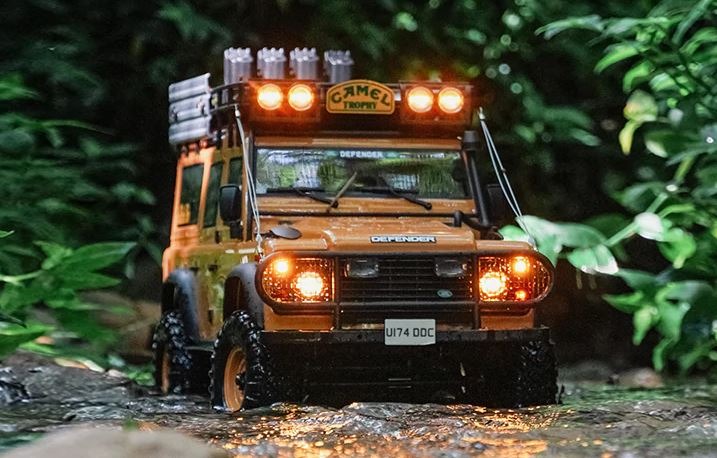
The FMS FCX10 Land Rover Camel Trophy Edition RS is a 1/10‑scale RC rock crawler/trail rig, with officially licensed Land Rover bodies (Camel Trophy livery) in various models (Discovery, Range Rover, Defender 110). It is part of FMS’s FCX10 climbing chassis line.
Here are its key specs and features:
Licensed Land Rover Camel Trophy body: Discovery / Range Rover / Defender 110; PC plastic or vacuum‑formed body with scale details like snorkels, roof racks, mirrors, spotlights, driver figure, etc.
FCX10 climbing chassis with metal skeleton / frame; front & rear solid (straight) axles; four‑link suspension; low center of gravity motor/transmission layout.
Oil‑filled metal shocks; adjustable; full set of ball bearings; metal links; metal steering tie‑rods; etc.
4WD; motor: 550 brushed 32T; 2‑speed gearbox (low / high gear) for crawling vs trail speeds; ESC: ~60A brushed speed controller; steering servo: upgraded 25kg metal gear; shift servo; metal drivetrain components except some large gear(s).
2S or 3S LiPo, ~5000mAh; XT60 plug; battery compartment ~140 × 47 × 40 mm (varies slightly by version).
Depending on body version: Length ~577‑609 mm, width ~243‑293 mm, height ~290‑341 mm. Wheelbase ~321‑326 mm. Tires ~110‑120 mm diameter (width variable). Ground clearance ~62‑68 mm (body‑variant dependent). Approach / departure angles vary by body (e.g. Range Rover ~43° approach, ~38° departure; other bodies slightly different).
Quick‑release body mounting (magnetic or knob type); magnetic light connections; multi‑function LED lighting (headlights, signals, roof lights); scale accessories; scratches‑withstand body etc.
Strengths:
Solid axles & 4‑link suspension give excellent articulation, helping it to climb over rocks, logs, uneven terrain. Solid axles are more forgiving in crawl scenarios, less prone to binding vs independent setups. The four‑link design helps maintain axle alignment under load.
Metal drivetrain & ball bearings reduce mechanical friction and wear, improving durability and allowing smoother handling under load. The 25kg metal steering servo provides good torque to steer under load.
Two‑speed gearbox: low gear for crawling and steep/technical sections; high gear for trail or faster movement where crawling isn’t sufficient or too slow. This adds versatility.
Scale realism + accessories make it appealing to hobbyists who care about looks: body details, lighting, accurate Land Rover style with Camel Trophy theme. This enhances the experience beyond pure performance.
Quick‑release & magnetic connections simplify maintenance and upgrades. Body removal, battery changes, etc are easier.
Weaknesses / Limitations:
Weight & Size: Because of the metal frame, solid axles, full accessories etc, the rig is relatively heavy. This can negatively affect performance when battery power is limited or in more vertical climbs. Also, larger tires help, but they further increase torque demands.
Brushed motor: While the 550 brushed 32T is decent, brushes wear down, and performance (especially torque or top speed) is limited compared to brushless options. Overheating can be an issue under heavy load.
Water / waterproofing: It is splash resistant (some components like servo or ESC may be splash‑proof), but likely not fully waterproof. Submersion or heavy wet conditions may lead to damage. There is indication the servo is waterproof, but not all electrics may be.
Aftermarket / parts availability & mod support: Since FCX10 is relatively new, aftermarket community is developing. Many parts exist, but less mature than long‑standing platforms (e.g. Traxxas TRX‑4, Axial SCX10 lines). Some custom parts (e.g. portal housings, diff covers, etc.) may be limited so far. Reddit discussions point out minimal aftermarket compared to TRX4.
Ground clearance & angles vary by body: Certain body styles reduce clearance / approach/departure angles relative to optimal performance. For example the Camel Trophy equipped bodies have scale detail that may interfere or reduce clearance (snorkels, bumpers, lights). Also, larger wheels help, but may hit parts if not adjusted.
Some of the nearest competitors to the FCX10 Land Rover Camel Trophy Edition RS include:
Traxxas TRX-4: Very popular platform; solid axles; portal axles on Pro version; two‑speed transmission; locking differentials; strong aftermarket; proven durability; wide availability of parts. (Exact specs vary by version) | TRX‑4 Pro especially is tough competition. Where the FCX10 may be lighter or cheaper, TRX‑4’s aftermarket, waterproofing, and reputation give it an edge. Also many TRX‑4 users have more experience with mods. FCX10 may beat in scale realism for some, but TRX‑4 may outperform in ruggedness, and in extreme conditions.
Axial SCX 10 III: Solid axles; multi‑link; oil‑filled shocks; licensed bodies; sealed or water‑resistant servos; full metal links, etc. Ground clearance ~63‑76 mm depending on version; motors around 35T brushed; ESCs around 40A; high torque servos; optional portals etc. Very close in capability. In many specs FCX10 looks competitive or slightly ahead in some build materials (metal frame skeleton, accessories). However, Axial’s platform is more mature, better known, more aftermarket parts, proven durability. Axial also offers more sealed components, better wet weather resistance in many RTRs.
Element Enduro: Premium components; advanced features (portal axles, aluminum parts, high‑quality finish), good mod potential; higher cost. | Likely higher in price; FCX10 may offer better value for money; but mod potential and performance of the Element Enduro may exceed FCX10 once fully upgraded.
Each of these has pros and cons. The FMS FCX10 seems well positioned as a value‑rich rig with good stock features, scale style, and a modern, capable chassis.
Here are modifications or upgrades that will yield benefits, both in the short‑term and long‑term :
Motor / ESC Upgrade
Switching from the stock 550 brushed 32T to either a lower turn brushed motor (more torque) or a brushless setup (if ESC supports / can be replaced) will significantly improve climbing and speed performance.
Alternatively, ensure good cooling for the motor/ESC: vents, heatsinks, reducing strain.
Battery Upgrades
Use a high capacity 2S or 3S LiPo with good discharge rating (C rating) so power delivery is smooth and strong.
Ensure the battery is balanced: weight distribution is important. Bigger battery may increase weight, so placing it low helps with center of gravity.
Tires & Wheels
Softer compound tires with appropriate tread for rock crawling or mud (depending on terrain). The stock tires are decent, but scale softness and grip can always be improved.
Larger tires (if clearance allows) can improve ground clearance, reduce bottoming out.
Foam inserts tuned for softness to allow flex without wheel de‑beading.
Shocks / Suspension Tuning
Adjust oil viscosity, spring rates to match the terrain: soft springs for rock crawling, stiffer springs for trail runs.
Longer shock travel or shock modifications (longer bodies, stiffer shafts) if risky contact.
Upgraded shock ends / pivot balls (metal, quality bearings) to reduce play.
Differential Articulation / Locking / Flex Enhancements
If possible, upgrade or reinforce diff covers, diff gears to handle the torque.
Adding slip‑grease locking or mechanical differential locks (if compatible) might help in certain versions or modded versions.
Weight Distribution & Scale Accessories
Lower heavy components (battery, ESC) as low as possible; avoid adding too much weight high up (roof racks, tools) unless they are lightweight.
Remove unnecessary scale accessories if they interfere or cause snagging.
Add skid plates, bash guards for under‑body protection (aluminum or thick plastic) to protect chassis and drivetrain.
Waterproofing & Protection
Seal electronics: cover the receiver/ESC where water could enter; conformal coat boards if possible.
Use waterproof or water‑resistant servos; ensure wires / connectors are protected.
Improve gearing or motor setup to reduce heat generation; wet areas tend to increase risk of failure.
Upgrade Steering Components
Even though it comes with a 25kg metal gear steering servo, consider upgrading steering linkage / servo horn if there’s flex or play under heavy load.
Steering geometry adjustments: tie‑rod lengths, steering stops etc to optimize turning radius and tire clearance.
Gearing Adjustments
Depending on terrain, you may want to adjust pinion/spur gear ratios to favour torque (for crawling) or speed/trail runs. Using a higher pinion tooth count gives higher speed but less torque; lower pinion gives more torque.
Also, tire size increase demands changes in gearing to maintain similar performance.
Aftermarket Components & Reinforcements
Metal skid plates, upgraded axles, portal axle conversion (if available).
Stronger driveshafts, CVDs, or universal joints to handle torque and articulation.
Brass or steel weight brackets or inside rims to lower center of gravity.
Summary:
The FCX10 Camel Trophy Edition RS is a strong contender in the 1/10 scale rock crawler / trail rig class. It delivers excellent scale realism, solid build with metal components, good drivetrain, and useful stock features like 2‑speed gearbox, LED lighting, etc. It offers very good value for what you get out of the box.
Against competitors like the Axial SCX10 III, TRX‑4 Pro, etc., it distinguishes itself on scale detail and the recent innovations in the chassis (quick release body, magnetic LED connections, full metal skeleton). Its limitations are mostly in the fact it is new, so long‑term durability is still being “proved,” and that some parts (motor, ESC, tires) could see meaningful gains from upgrades.