
The Ferrari 250 Testa Rossa
The Ferrari 250 Testa Rossa
UBER CARS
Admin
5/29/20268 min read
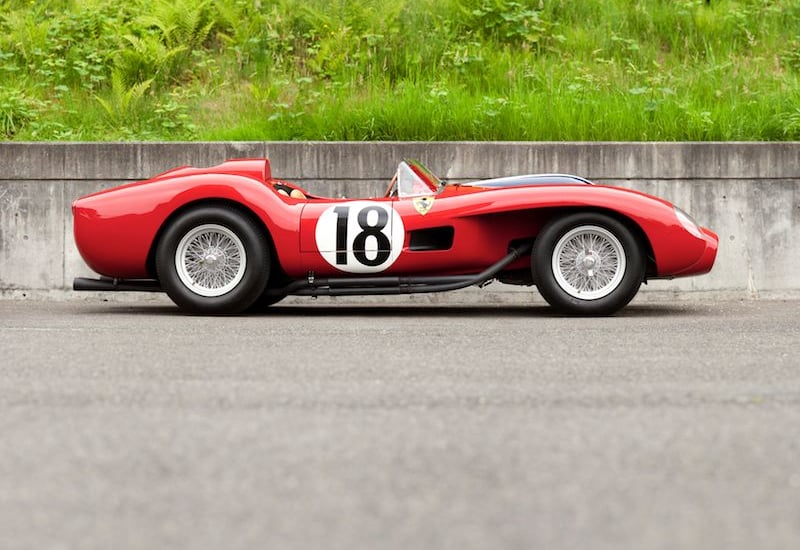
The Ferrari 250 Testa Rossa (TR) stands as an unparalleled titan within the pantheon of automotive history. Produced between 1957 and 1961, this machine captured the pinnacle of sports car racing during a golden era of mechanical purity, danger, and romanticism. Named literally for its signature red-painted valve covers—"Testa Rossa" translating to "Red Head" in Italian—the car was engineered with a singular, unyielding purpose: to secure victory in the FIA World Sports Car Championship under newly instituted structural regulations.
The Genesis and Development
By late 1956, the FIA (Fédération Internationale de l'Automobile) recognized that the escalating displacements and terrifying power outputs of unlimited sports cars (such as the monstrous 4.6-liter sports racers and Maserati's brutal 450S) were outpacing contemporary tire technology, brake capacities, and circuit safety. In response, for the 1958 racing season, the governing body imposed a strict 3.0-liter displacement limit for prototype sports cars competing in the World Championship. This regulatory shift blindsided manufacturers relying on brute force but played directly into the hands of Enzo Ferrari and his chief engineer, Carlo Chiti.
Ferrari already possessed one of the most reliable, highly developed 3.0-liter engines in existence: the legendary Colombo-designed V12. This architecture had proven its mettle in GT cars and earlier sports racers. To capitalize on the impending 1958 rules, Ferrari set to work throughout 1957 to build an entirely new sports racing platform designed around this power unit. The result was a vehicle that not only complied with the regulatory constraints but fundamentally redefined the paradigm of endurance racing endurance, winning the 24 Hours of Le Mans in 1958, 1960, and 1961.
The mechanical lineage of the 250 Testa Rossa is characterized by iterative perfection. Under the guidance of Carlo Chiti, the engineering team married proven components with experimental aerodynamics. The heart of the machine was the 2,953 cc Type 128 V12 engine. Rather than utilizing a dual overhead camshaft configuration (which was complex and temperamental), Ferrari chose a single overhead camshaft (SOHC) per cylinder bank design, prioritizing absolute reliability over volatile top-end power. This decision was critical for 24-hour endurance races where finishing was the prerequisite to winning. To feed this high-revving V12, Chiti installed six twin-choke Weber 38 DCN carburetors mounted atop a specialized intake manifold. The cylinder heads were redesigned with individual intake ports, switching from the previous siamesed port design, which drastically improved fuel-air mixture distribution. The red paint applied to these modified heads gave birth to the moniker and immediately became a visual symbol of Ferrari's engineering dominance.
Chassis Architecture, Evolution and Design Variations
The physical form of the 250 Testa Rossa evolved dramatically across its brief production window. The foundational chassis, designated Type 525, was a traditional tubular steel spaceframe composed of oval and round main tubes. This provided an exceptional stiffness-to-weight ratio, vital for coping with the undulating and unpaved public road circuits typical of the era, such as the Targa Florio.
The 'Pontoon Fender' Scaglietti Masterpiece (1957–1958)
The earliest and visually most iconic variants featured bodywork executed by Carrozzeria Scaglietti, based on a design sketched by Sergio Scaglietti himself. Influenced by Formula 1 aerodynamics, Scaglietti conceived the famous "pontoon fender" bodywork. The front fenders were detached from the central nose cone, creating a pronounced gap behind the front wheels. The theory was that air entering the front grill would flow over the radiator and escape through these cavernous openings, reducing high-speed aerodynamic lift while simultaneously directing cool air over the massive drum brakes.
While visually arresting and highly effective at cooling, the pontoon shape introduced a severe aerodynamic defect: at ultra-high speeds on straightaways like Le Mans' Mulsanne Straight, the open flanks trapped air and created extreme aerodynamic turbulence and high-speed instability. Drivers noted that the car felt light and unpredictable above 150 mph. Consequently, factory team cars quickly shifted away from this design, though privateers continued to race them to great effect.
The TR59, TR59/60, and TR61 Works Development
For the 1959 season, Ferrari adopted fully enclosed, more aerodynamic bodywork crafted by Fantuzzi. These models featured lower, more enveloping lines, an asymmetrical hood bulge to clear the carburetors, and a transition to disc brakes, which replaced the antiquated drum systems. By 1961, the final iteration (the TR61) sported a radical twin-nostril front nose, a high rear tail spoiler, and an independent rear suspension system, which replaced the traditional live rear axle. In total, only about 33 to 34 original 250 Testa Rossas were manufactured across all variations, making them exceptionally scarce.
Factory Options & Configuration Variables
Because these were pure competition cars, the concept of "factory options" in the modern commercial sense did not exist. Instead, modifications were bespoke, tailored to specific races, team entries, or affluent private clients. The variables available during commissioning or factory updates included:
Fuel Tank Capacity: Endurance variants utilized oversized 140-liter fuel tanks mounted behind the seats, requiring modified rear bodywork contours, whereas shorter sprint events used a lighter 100-liter setup.
Windshield Variations: Drivers could specify a full-width wraparound plexiglass windshield (mandated by FIA regulations for certain classes) or a minimal single-pilot aero screen for reduced drag.
Exhaust Configurations: Side-exit exhaust systems were often utilized for tight, twisty circuits to prevent damage from bottoming out, while rear-exit pipes were preferred for sustained high-speed aerodynamic tracking.
Cockpit Accommodations: Steering wheels were available in varying diameters, wrapped in mahogany or walnut, with seats upholstered in varying weights of canvas or tailored leather according to individual driver preference.
Materiality and Colors
The materials employed in constructing the 250 Testa Rossa represent a fascinating cross-section of mid-century aviation technology applied to automotive racing. To minimize weight, everything non-essential was deleted, and heavy metals were substituted with advanced lightweight alloys wherever possible.
Metallurgy and Structural Composition
The bodywork of every original 250 TR was hand-beaten out of sheets of Peraluman 25, an exceptionally lightweight aluminum-magnesium alloy (roughly 1.2 mm thick). This material allowed the artisans at Scaglietti and Fantuzzi to hammer complex curves over wooden bucks, yet it possessed high tensile strength and resisted tearing under high vibrational stress. The trade-off was extreme fragility; a minor collision could instantly deform the body panels, requiring specialized metal-shaping expertise to reform.
For the engine components, Ferrari utilized Silumin and Elektron (an ultra-lightweight magnesium alloy) for the crankcase, oil pan, and intake manifolds. The suspension used forged steel wishbones, while the wheels were intricate wire-spoke units manufactured by Borrani, featuring aluminum rims laced with steel spokes to combine rotational compliance with lightweight performance.
Historic Color Palette and Livery Designations
While modern culture assumes every vintage Ferrari left the Maranello factory in standard red, the historic reality of the 250 Testa Rossa is deeply nuanced. In the late 1950s, racing liveries were mandated by the FIA to reflect the country of the entering team or driver, rather than corporate sponsors. The primary colors utilized on the 250 TR include:
Rosso Corsa (Nitrocellulose Paint) for Italy / Scuderia Ferrari Works
White with Blue Central Stripe for United States / Luigi Chinetti’s NART
Bleu de France France for Privateer Entrants
Yellow (Giallo Modena) for Belgium / Ecurie Francorchamps
British Racing Green for United Kingdom /Privateers
Inside the cabin, the concept of luxury was completely absent. Dashboards were painted in a matte crinkle black finish to prevent blinding sun glare from reflecting into the driver's eyes. The floors were exposed aluminum, completely devoid of sound deadening or carpeting. Seats were most frequently covered in a durable blue or grey cotton corduroy fabric, prized for its ability to breathe and prevent the driver from sliding around during high-G cornering, though original leather specifications were occasionally used for high-profile clients.
The Rivals: Competitive Landscape
The Ferrari 250 Testa Rossa did not operate in a vacuum. Its legendary status was forged through fierce combat against brilliant engineering houses from Great Britain, Germany, and domestic Italian rivals. Understanding its competitors highlights why the 250 TR is so uniquely collectable today.
Aston Martin DBR1
The closest and most potent challenger to Ferrari’s supremacy came from Newport Pagnell. The Aston Martin DBR1, developed under Ted Cutting, featured a sophisticated perimeter spaceframe chassis and an iron-block, alloy-head 3.0-liter inline-six engine. Unlike the Ferrari, which relied on brute V12 power and straight-line speed, the DBR1 was remarkably nimble, utilizing a transaxle gearbox and a torsion bar suspension system that gave it superior handling on technical tracks. In 1959, the DBR1 achieved the unthinkable by defeating Ferrari at Le Mans and capturing the World Sports Car Championship, piloted by legends Stirling Moss, Carroll Shelby, and Roy Salvadori.
Jaguar D-Type (3.0-Litre Conversions)
Though the Jaguar D-Type had dominated Le Mans from 1955 to 1957 utilizing its legendary 3.4 and 3.8-liter XK engines, the 1958 regulatory change forced Jaguar and its privateer teams (like Ecurie Ecosse) to sleeve down or build bespoke 3.0-liter variants of the inline-six engine. These 3.0-liter D-Types lacked the reliability and torque of their larger predecessors and struggled to match the continuous development of the 250 TR, marking the sunset of Jaguar's frontline factory sports car dominance during that decade.
Porsche 718 RSK / RS60
From Stuttgart came a completely different engineering philosophy. Porsche countered Ferrari’s front-engined V12 sledgehammer with a mid-engined, ultra-lightweight, air-cooled four-cylinder boxer engine. The Porsche 718 RSK weighed a mere fraction of the Ferrari (approximately 530 kg vs. the 250 TR's 800 kg). On tight, grueling circuits like the Targa Florio, the nimble Porsche repeatedly humbled the more powerful Ferraris, proving that lightness and mechanical agility could match raw horsepower.
Maserati Tipo 61 "Birdcage"
Maserati responded with the brilliant "Birdcage," so named for its intricate chassis made of over 200 small steel tubes welded together. Featuring a canted 2.9-liter four-cylinder engine, the Tipo 61 possessed extraordinary balance and exceptional visibility through its wraparound windscreen. It was blindingly fast in the hands of drivers like Dan Gurney, but its hyper-complex chassis was fragile and prone to cracking under long endurance strains, preventing it from matching Ferrari's robust reliability records.
Collectability and Investment Potential
From a financial and collectability perspective, the Ferrari 250 Testa Rossa occupies the absolute stratosphere of the global alternative asset market. It is universally classified as a "blue-chip" asset, transcending the standard collector car market to behave more like a masterwork painting by Monet, Picasso, or Da Vinci. The investment potential for the 250 Testa Rossa remains highly insulated from standard economic volatility. The asset asset class exhibits a near-zero correlation with traditional public equities or fixed-income markets. Because billionaires and sovereign wealth funds view these specific cars as cultural artifacts and ultimate status symbols, demand continually outstrips supply. Furthermore, their eligibility for ultra-exclusive international events—such as the Goodwood Revival, the Monaco Historic Grand Prix, and the Pebble Beach Concours d'Elegance—guarantees persistent lifestyle and intrinsic utility for their curators.
Rarity and Verification Paradox
With only ~34 examples ever produced, the pool of available cars is finite. Because many were raced hard, crashed, rebuilt, or modified in-period, the primary driver of an individual car's value is its **provenance and documentation**. A 250 TR with its original matching-numbers engine, gearbox, and original Scaglietti bodywork commands an astronomical premium over an example that was re-bodied by the factory or independent shops after a period racing accident. The presence of a Ferrari Classiche Red Book certification is mandatory to validate authenticity in the modern market.
Historical Transaction Trajectory and Valuation Metrics
The capital appreciation of the 250 Testa Rossa over the last four decades is nothing short of extraordinary. In the 1970s, these cars were viewed merely as obsolete racing machines, changing hands for five-figure sums. By the late 1990s, valuations breached the multi-million-dollar mark. In 2009, a 1957 pontoon-fender model sold for a record-breaking $12.1 million at auction. Just two years later, in 2011, another exemplary prototype sold for a staggering $16.4 million.
In the current private treaty market, transactions for the finest, unblemished examples with impeccable racing pedigree are known to exceed $35 million to $45 million USD. This places the 250 TR in a select club alongside its sibling, the 250 GTO, as one of the most valuable automotive objects on earth.
Summary and Final Thoughts: The Scarlet Legend
The Ferrari 250 Testa Rossa represents a rare convergence of industrial design, engineering genius, historical romance, and severe scarcity. It is the ultimate expression of Enzo Ferrari's golden age. Whether viewed as an engineering masterpiece that tamed Le Mans, a sculptural work of art hand-formed in aluminum, or an elite vehicle for capital preservation, its legacy is permanent. For the elite tier of global collectors, the acquisition of a 250 Testa Rossa is not merely an automotive purchase; it is the assumption of a lifetime stewardship over one of mankind's greatest mechanical achievements.